Star Trek Adventures 2nd Edition
A Quinns Quest Knowledge Knight’s Review Jam Review by Scruff
In a world where the systems of power are intent on shoving us into the horrible biting cogs of the machines of capitalism, one game stands bold enough to say “wouldn’t it be nice if the people in charge were good and cared about ethics?” That one game, unsurprisingly to those familiar with its source material, is Star Trek Adventures 2nd Edition!
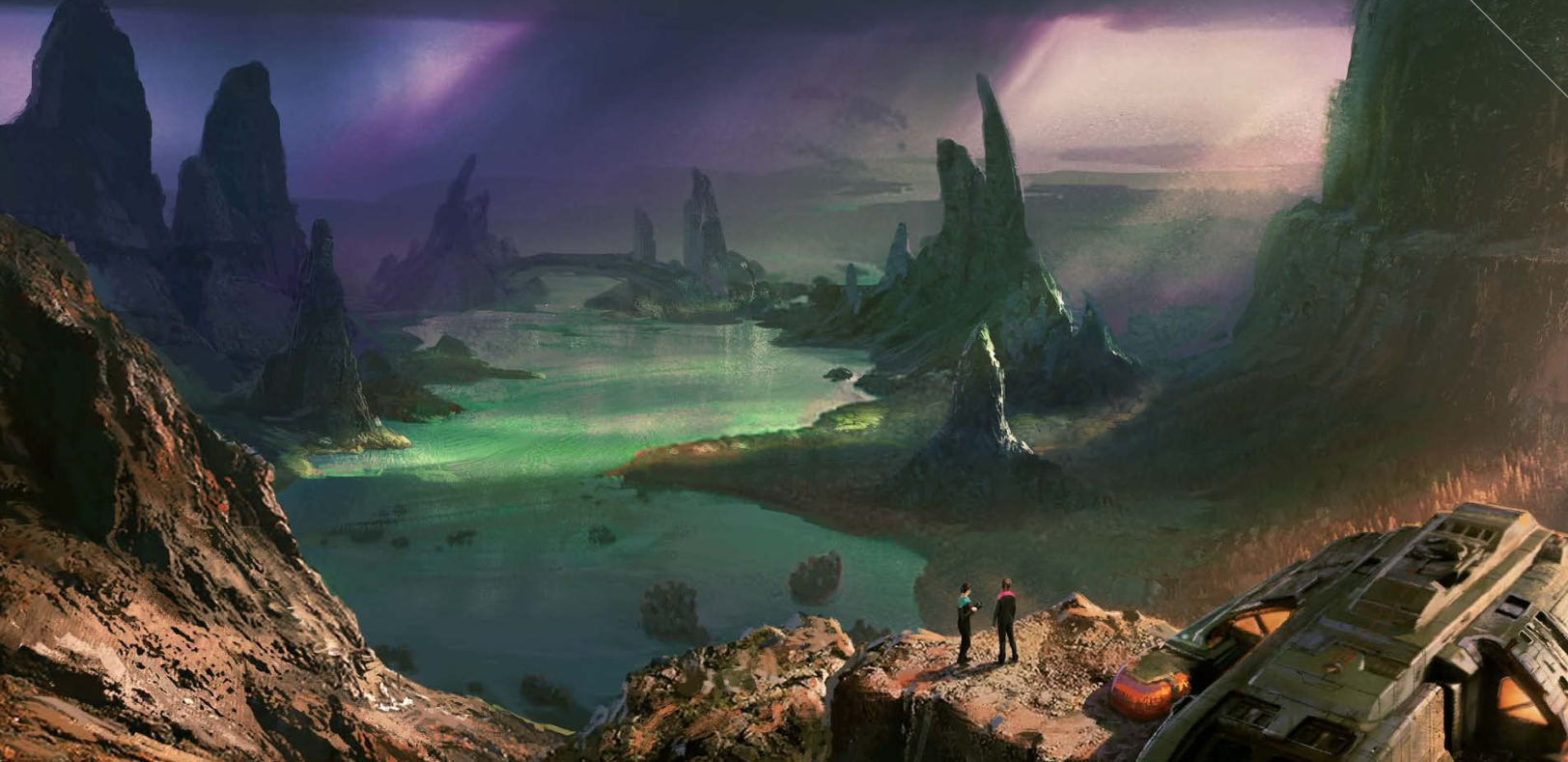
I’ve always had a weird relationship with intellectual-property-based TTRPGs, but they are popular for a couple major reasons. The foremost of which is the raw excitement of getting to experience more of the IP you and your friends like. At the best of times this can turn the joy you all have into a campaign that feels like a new season of a TV show you already love. The second reason is addressing one of the biggest hurdles for tackling a new TTRPG at all: understanding the setting. If you’re going to play a character in a fantastical setting, you’re going to run into a pretty common pitfall where you and your character have different levels of understanding of the world. This is a common enough problem that a lot of the sharpest modern games (e.g. FIST, or The Wildsea) do their best to avoid much established canon at all. If you can instead enter the game already knowing what you need to, it can mostly bypass that problem right out of the gate. Fans of IPs are, by their nature, familiar with these worlds and will know how exciting it should be to run into a jedi, or how bad news it is when they hear the Negaverse has returned.
If you have played IP-based TTRPGs, you’ll be familiar with the fact that you often have to peel apart these settings a bit to make your game work. The worlds of these IPs feed the explicit stories they’re trying to tell. That’s how it’s supposed to work! These writers aren’t trying to make a world that’s easy to slot your OCs into, and trying to tell other stories at the table immediately causes character and plot to grate against the ever-present canon-compliance. It threatens to turn the table into a place where the most trivia-brained among you can turn their knowledge into a cudgel to beat the fun out of everyone else.
Star Trek as an IP doesn’t sidestep all of those problems, but the fact that the canon has been peeled open and reformed by so many creative teams across every medium since the 60s means that we have a few ground rules established that make this setting real solid for a TTRPG:
The United Federation of Planets, basically an idealized Space UN and likely who you will be working for, has thousands of ships with big crews around the galaxy
The Federation is incredibly diverse, allowing for a massive range of weirdos you can play as, with more species getting added all the time
The galaxy is huge and still full of mysteries, even in areas the Federation includes within its borders. And they love exploring those mysteries! Most people join the Federation because they want to learn about weird stuff!
These established truths make it very easy for fans of Trek to imagine their own fun little crews of ships going around doing diplomatic missions, getting in scraps with Romulans around the Neutral Zone and interacting with bizarre energy beings. This setup also lets your table of Star Trek Adventures engage with canon as much or as little as you like! You can bounce around doing mystery-of-the-week setups on different planets with barely any Trek knowledge to start with, or you could crack your knuckles and dive headfirst into the galactic-political aftermath of the Dominion War and either would likely feel equally satisfying.
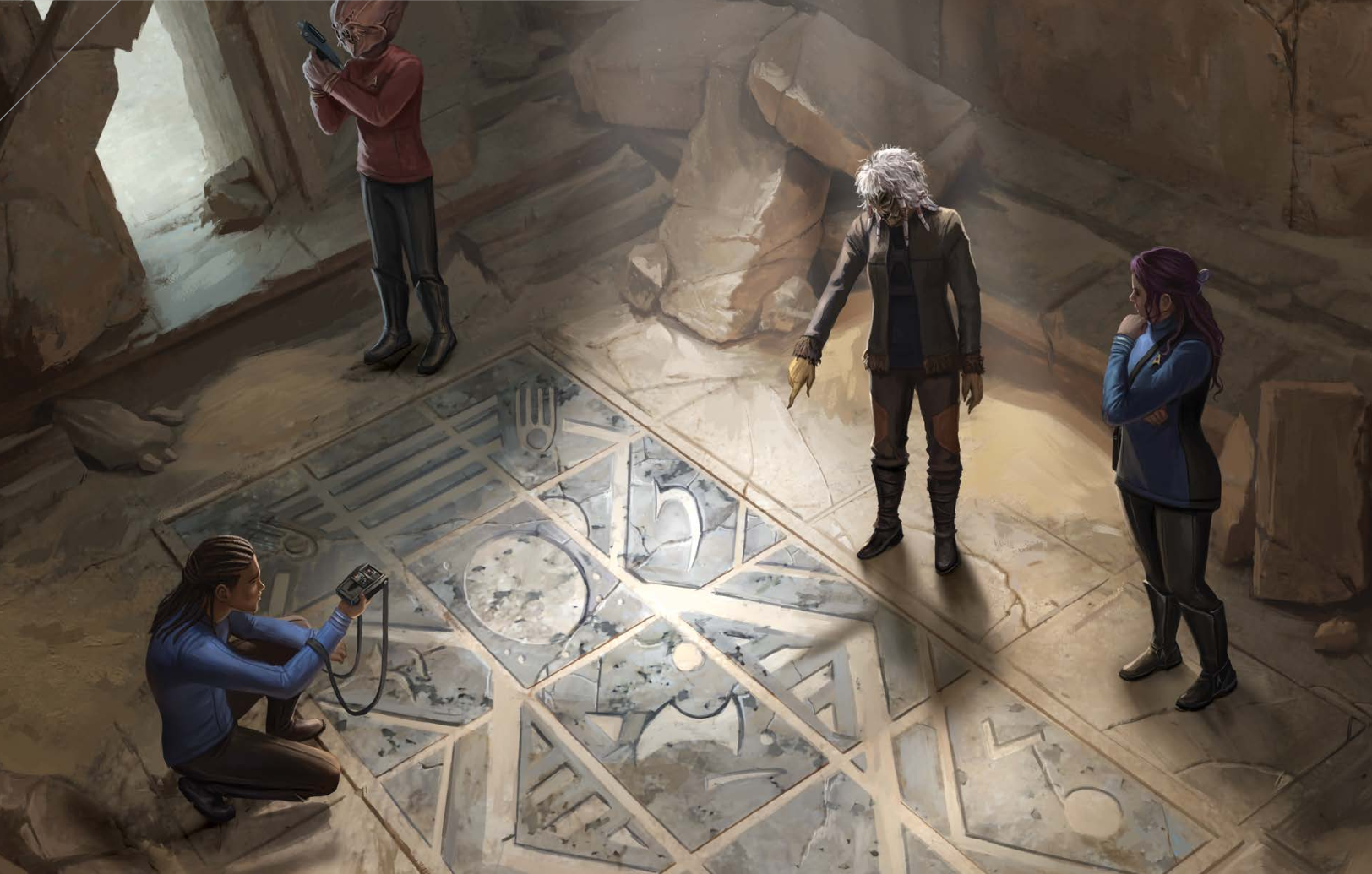
Fig 1: A Mystery
Now you may be asking “Scruff, have you played Star Trek Adventures 2e?” You bet your latinum I have! That’s the Quinns Quest Guarantee! (Admittedly, not one I’m required to adhere to for this jam.) I played a fantastic 23 session campaign of Star Trek Adventures with the four biggest Trek sickos in my rolodex, where they played as the first Federation timeship in a wonderful 25th century campaign. Aided by the gorgeous art and presentation work in this book, we were able to step into a world of intense diplomatic decisions, reconfiguring engine parameters, and evasive maneuvers. After a hefty session 0, of course, where my players determined their roles aboard the ship, what kind of ship they even were, and went through a writing-heavy character creation process that encouraged players to list out things like whether they grew up on a starbase and if they studied abroad on Betazed.
Part of that character creation is giving your character values: core tenets of who they are as people. Your character might believe “patience is key” or “every puzzle has a solution” and any dice roll that is related to that value can be juiced up. If your character goes against their value it can get crossed out, and even replaced, leaving beautiful mechanical breadcrumbs for character growth. It’s great for GMs making NPCs too because important characters are supposed to have four values of their own. If you come up with one or two values for your villainous pirate captain, that’s easy, and likely will result in something pretty standard (e.g. “I’m taking your ship” and “If you don’t give me what I want I’m going to snap!”). At the third or fourth you can’t help but give her some character depth (e.g. “Every time you slip up is an opportunity for me” and “All my pirate friends hate you and I’m starting to see why”). It’s a great system for making you flesh out your NPCs and is something I think about even in other systems I run now.
The first thing I noticed actually running this game is that Star Trek is an unusual IP to grapple with for GMs like myself who are used to either low level dungeon crawls where players can feel powerless, or superpowered characters who are ready to go dukes up against whatever they come across. Starfleet officers are mostly just regular people, but they’re regular people with ludicrous technology and a strong desire to avoid violence. There’s a guy terrorizing the town? Scan for him from orbit and transport him to the brig. The country is in famine? Just call Starfleet HQ and they’ll just send a supply line out here. There’s a dungeon with a dangerous artifact deep inside? That’s really property of the natives here and at most we should set up a preservation perimeter to ensure it stays there. It meant that I had to do a lot of research on how to write the sort of problems that aren’t easy to solve with a replicator or phasering something from orbit. This research was mostly just watching more Star Trek (oh no!).
The publisher, Modiphius, is generous enough to give plenty of solid missions for free on their website as “mission briefs”, but the game is very friendly to tables that just want to make their own bonus episode - or season! - of Star Trek from scratch too. Also, shout out to Modiphius for consistently putting some seriously diverse representation in their art, production, and writing teams! Mexican illustrator Aurea Freniere (@milosflaca.bsky.social on Bluesky), Indigenous writer Mike “O’dah ziibing” Ashkewe (@birdmanguelph.bsky.social on Bluesky), and queer game designer Alison Cybe (@aligundam.bsky.social on Bluesky) are particular contributors I’ve enjoyed following. It’s clear that they put effort into finding underrepresented voices and paying them to go nuts with an IP that has diversity as a major part of its mission statement.
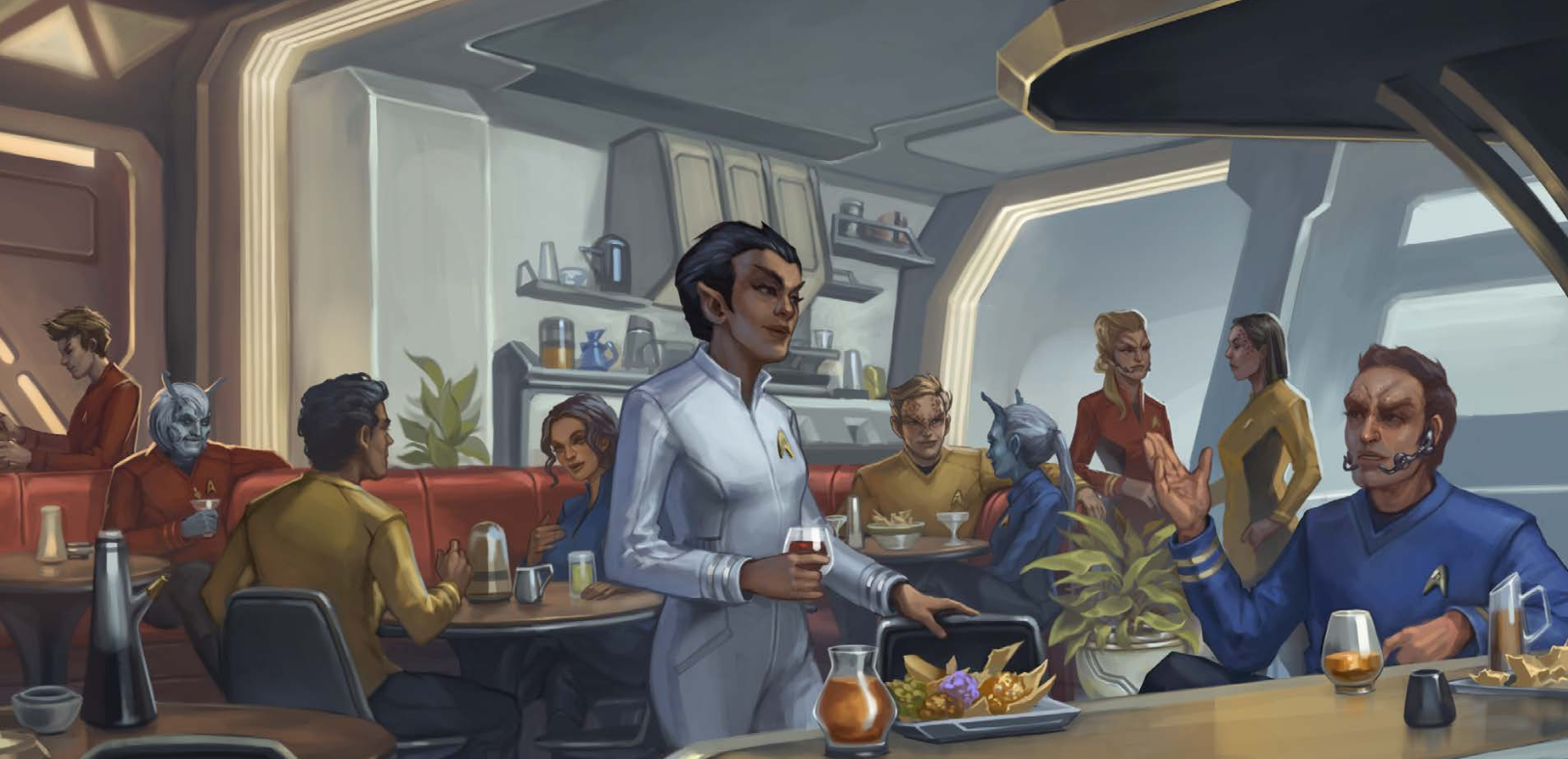
Now at this point you’ve probably picked up on the fact that I think this game captures the energy of Star Trek at the table pretty well, but what does it actually feel like to play? It’s got a slurry of Ars Magica troupe play mixed in with a hefty dose of Fate aspects and a chunk of Blades in the Dark clocks thrown in for good measure, none of which you have to be familiar with to follow this review. All of that is topped with a very prominent metacurrency system that feeds into a healthy ebb and flow of drama at the table. It all works astonishingly well, but as you might imagine, it does come with a lot of fiddly bits that are easy to forget in the moment. It feels like some huge Dr. Seuss contraption of a game that has so many whirring mechanical bits sticking off of it that it feels like there’s no way it actually does anything practical, much less well. Once it gets moving, with admittedly some pretty frequent CTRL+F searches through pdfs (have those sticky tabs on hand for using the physical book), it starts doing what seems impossible: it works great! Mostly!
I want to start with the momentum system here, our metacurrency system mentioned above. Let’s say your engineer wants to repair a system on the ship. They ask the GM how difficult it is on a scale of 1 to 5, something they always know before attempting the roll because they are competent Starfleet professionals. The player then rolls 2D20s and for each number they roll equal to or below their character’s relevant stat they get a success. If they get enough successes to meet the difficulty they succeed! If they get more successes than they need, the excess goes into a shared party pool of momentum, which can be used by any player to purchase more dice for any check, cleanly capturing the aspect of teamwork that’s so relevant to Starfleet. This also plays nicely with complications. Every 20 that the players roll causes a complication to appear, separate from the success or failure of the roll, such as a computer frying or a smoke vent getting blasted open. More difficult checks mean more dice needing to be rolled which means more complications are likely to occur. Plus, if you want to make something feel risky without making it necessarily harder, you can make checks have a bigger complication range so complications show up when, for example, an 18 or higher is rolled. It gives the GM some handy knobs to tweak!
If the player doesn’t have momentum when facing a problem of difficulty 3 or higher, they may be interested in purchasing dice by instead giving the GM Threat. Threat is the GM currency that lets them cause problems for the players, like letting villains avoid damage or make something on their ship break at a critical moment. Some GMs may justifiably feel like these are training wheels, but the system is integrated as a mirror to the momentum system in a way that ties into other mechanics leading to a nice back and forth at the table. Basically, players get to do cool things at the cost of giving the GM Threat. For example, my first officer was a Cardassian and the unique Cardassian species ability is they can give the GM a Threat to tell for certain if someone is lying. Whenever she wanted, which was frequently, she would give me that Threat with an excited glint in her eye knowing that she was going to get more drama later.
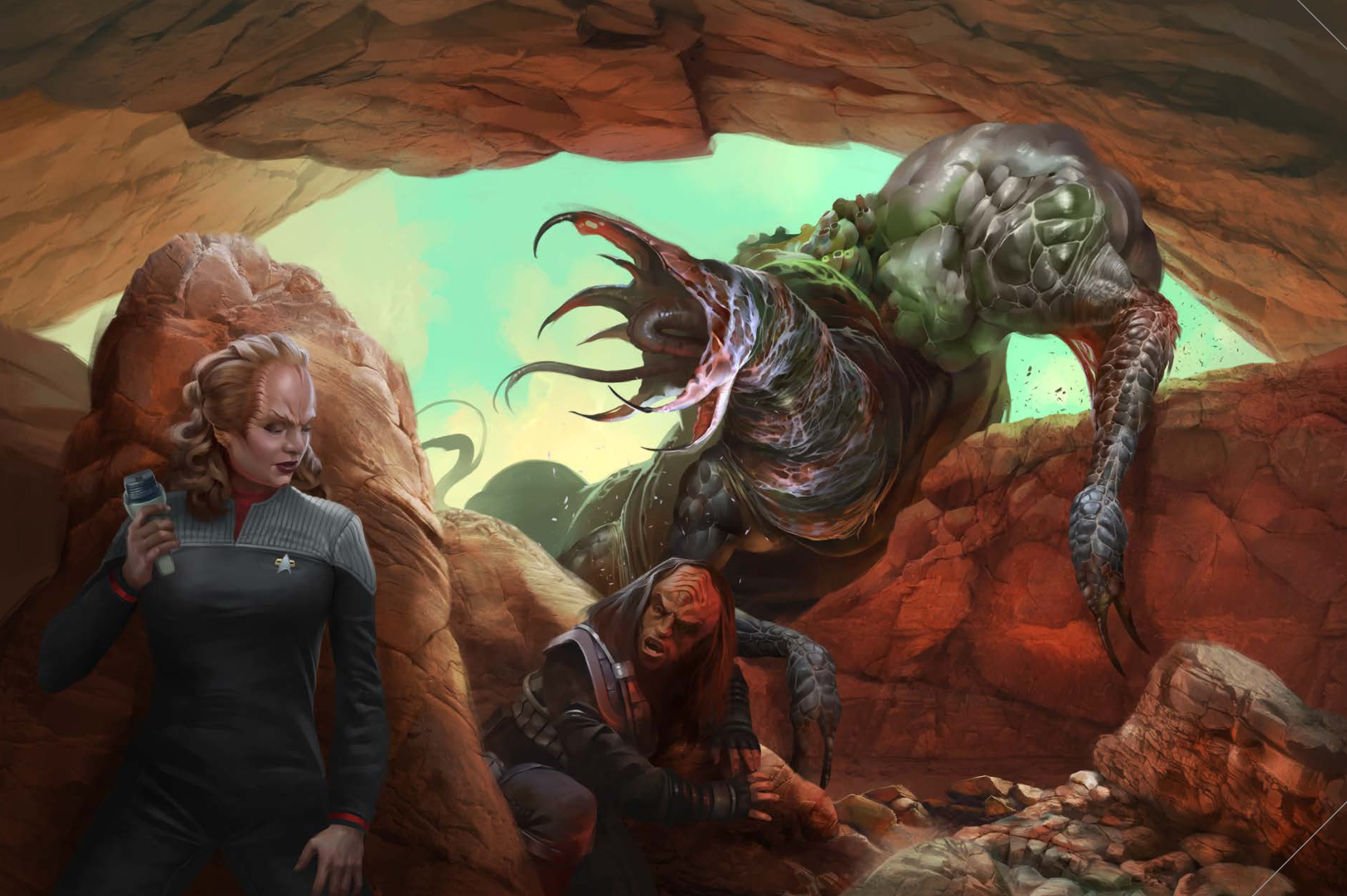
And you gotta keep that promise
If that ability sounded fun, you are absolutely right! The abilities in this game have so much juice behind them! It’s apparent going back to the first edition source books that making the player abilities really pop was a huge focus of the second edition redesign (along with streamlining ship power and removing a whole dice roll category). Do you want your engineer to be able to make easy but temporary fixes that fall apart later that day? Do you want to start every scene knowing about whatever new location you’re in because of your contacts in the area? Do you want to have a rivalry with another player character and heal up every time they’re having a bad day? Or maybe you’ll do what that same First Officer did, and take an ability that lets her just say “no” once per encounter when someone takes damage, as long as she describes the precaution she took to prevent it. She got to play the stern dad going “and this is why situational awareness is important” to the terrified ensign who just entered her first firefight, and it was funny every time
Speaking of ensigns, there are a lot more than one party’s worth of crew aboard your starship and the game has a whole supporting character system to make sure that crew really comes alive! Let’s say you have players as the captain, helm, and chief engineer. Suddenly a weird medical problem comes up and the players decide “we should have a chief medical officer.” In the moment, the group makes a barebones supporting character which one of them takes charge of playing. When the scene is over, they can go back to playing their main character instead. Then later, if the players need that CMO again they could have a different player control them. Plus every time you bring a supporting character back, the party gets to give them a little boost to stats, abilities, or personality until they reach the same level of complexity as the main characters.
My players adored their supporting crew! They got to make an ensign who basically existed to cause problems. They got to giggle with glee every time one of them played their hypercompetent valley girl chief engineer. They made a tactical officer where at first they didn’t really know who he was but by the end of the campaign they had honed him into a photon torpedo enthusiast. The fact that these characters are shared made it such a delight and made sure everyone around the table was engaged with questions like “how do we feel about making this lady really into plants?”
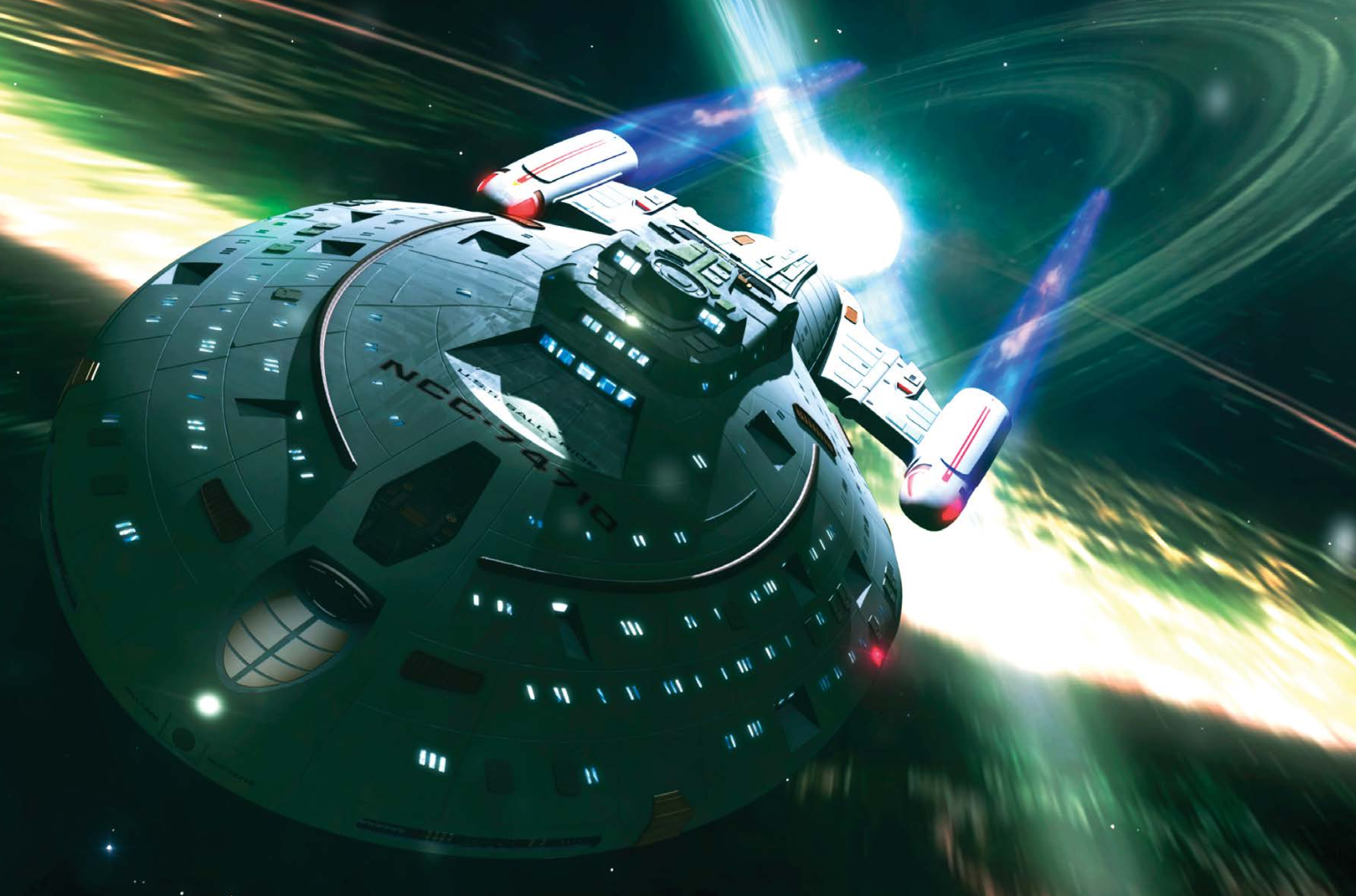
The last main mechanic I really want to dive into is traits. At their most basic level they are established, notable parts of the characters or world. Mechanically, they can come pre-baked or or they can be added and removed by players and the GM over the course of play. If they are relevant to a skill check they can modify difficulty or even make some checks trivial or impossible. The book gives plenty of good examples to make this kinda vague concept understandable and once you do understand it, it becomes a core part of the experience. It also makes the tiny box on the character sheet you get for your own character’s traits feel silly.
Let’s say you’re the pilot trying to navigate an asteroid field in your ship. It might start out as difficulty 1, but maybe there’s a few Dominion ships on your tail and the GM says you’re now dealing with the trait “under fire” which could raise the difficulty to 2. Your science officer uses their turn to map out the asteroid field ahead and grants the crew the “charted course” trait, reducing the difficulty back to 1. But then a Q appears and puts your ship in a stasis field giving it the “stasis field” trait, preventing you from making any progress at all until that trait has been dealt with. This system makes sure that every scenario ends up full of solid descriptions. Even if you don’t have a clear idea of what the bridge of a Kazon ship looks like, by the end of a firefight on that bridge you and your players will have filled it with traits to make the scenery pop with tons of freeform descriptions. An exploded piloting computer, a door jammed shut, some weird leaking gas, you’ll have built a vibrant mental image! By the end of the campaign my crew was getting fast and loose with these in a way that felt great. In my notes for the finale we had traits like “intensive goo pool therapy” and “deflector dish ready to deflect.”
The culmination of all the most complicated parts of the game come in ship-to-ship combat. It’s clearly the most tactics-focused part of the design and it’s pretty tasty even at its most basic. Once your players understand how this game works, let them at a short ship combat and watch them work together to wrangle their flying machine that immediately feels immense. The game makes ships feel weighty in a way that takes your team working in sync to make it all run smoothly. It’s a real final exam for the game! I love it! What I also love about ship combat is that because of the setting, you’re rarely fighting another ship to the death. Instead you’re often trying to buy time for evacuating citizens or disabling the engines of someone trying to escape. This leaves the possibility space extremely open for resolutions and prevents it from just being the crew maximizing damage output. It also prevents it from eating up hours at a time unless you really want it to.
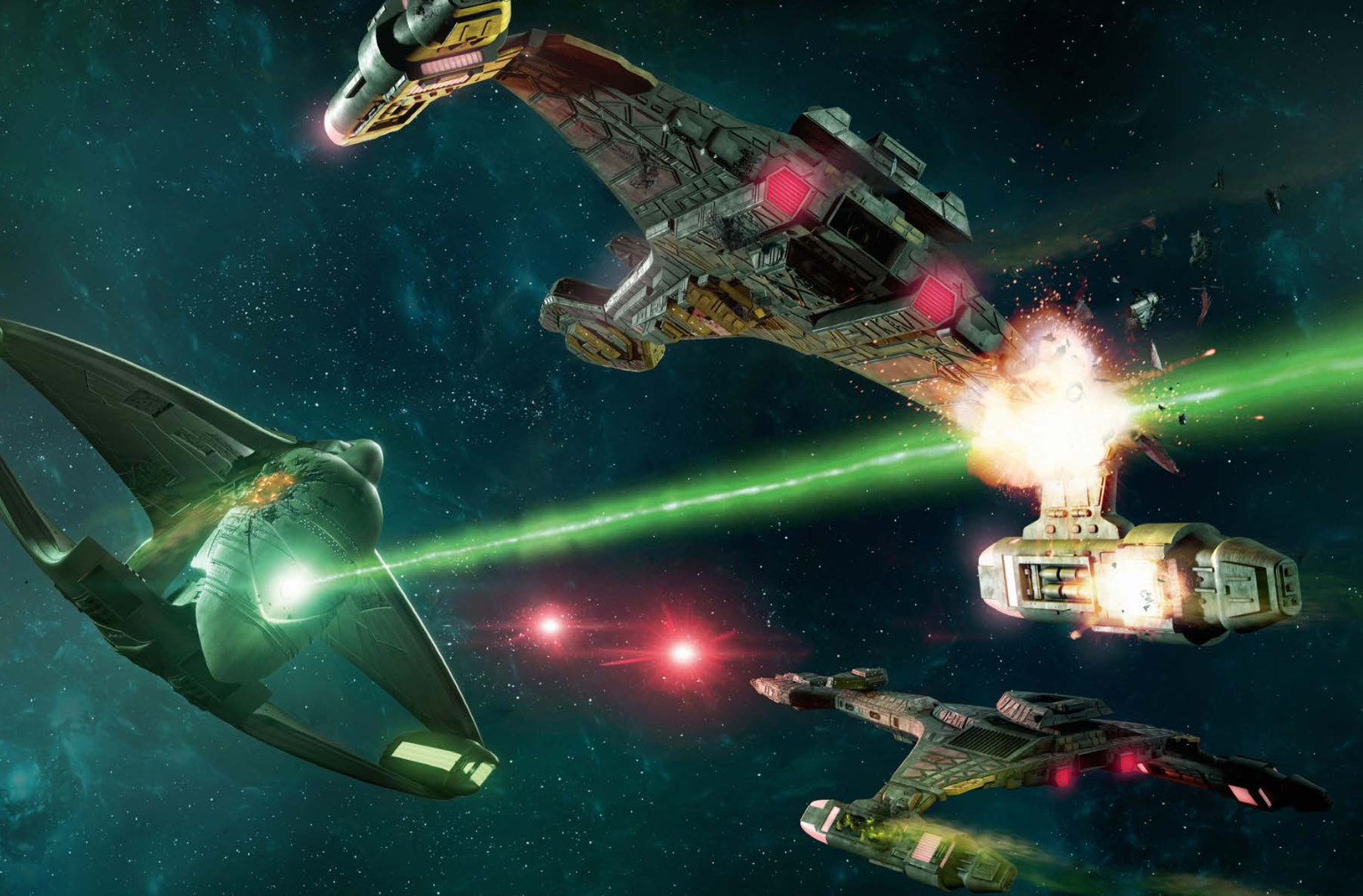
That’s going to need a repair roll
This game’s hearty cocktail of mechanics served my table so well for telling the stories we wanted to tell, and truly my table had a fantastic time. But after really getting to know this game, I think the streamlining they did in the second edition should have gone further. I really shouldn’t be the judge of which games are too complicated on my own: I have basically all of Pathfinder 1e burned into the circuitry of my brain and devoured the rules of this book fast. What makes me notice when a game is too much is my players making choices to engage with the mechanics less. Remember all those wild and fun abilities I mentioned earlier that your players can get? Those are mostly gotten through talents, basically Dungeons & Dragons feats. When you advance your character you can choose to boost one of your stats a tiny bit or get one of those abilities. I expected my players to get new abilities all the time given the less exciting alternative, but my players almost never did because they just didn’t want to have to think about a new thing. I don’t blame them!
There are a ton of fiddly bits in this game that often would snag us. Ship weapons for example: all weapon types have a base damage amount but they also get bonus damage derived from the ship’s weapon score that you have to check a chart for. Non-ship weapons just use their listed damage with no bonuses so I missed this for the first few ship combats of my campaign and my players felt like they were fighting with kid gloves on. Weapons also all have weapon tags that make them more than just a damage number, and we had to look up what those meant all the time. Torpedoes, as opposed to energy weapons, have an increased difficulty to hit and generate threat when used, but they also have the option to fire them as a salvo adding 3 Threat instead and increasing the attack damage by 1 and granting it the Area or Spread tag. This is trad gaming behavior.
I don’t want to dunk on “traditional games”, games that lean toward a more simulationist approach to game design, but all the mechanics that really shine in Star Trek Adventures are more at home with games focused on storytelling. If anything, this game feels like an offramp from the D&Ds of the world to explore the story game space and by the time you get to the end and play other story games you look back and ask why all this chaff is here. And, to be clear, I get why it’s here. It’s here to make regular character advances feel meaningful while not making them feel superhuman. It’s here to make regular, interesting decisions a part of the gameplay. It’s here to densely pack flavor into every roll. I just wish it wasn’t also here to make my players flip through tables constantly.
Pictured: The captain finally finding the page for reputation spends
Despite this, I hope I cannot be more clear that I adore this game. I played a huge campaign once and I fully expect I’ll do it again! In classic QQuest tradition, I reached out to the project manager of Star Trek Adventures at Modiphius, Jim Johnson (@ineti.bsky.social on Bluesky), and asked him what games he wanted to pay it forward to and he kindly responded:
I think anything from The Yellow Hand group, including Sentience, Once Upon, and Ashland, need more eyes on them. I would also give a general shout out to itch.io creators and publishers. Indie games are growing the industry.
Thanks to this game my friends and I got to explore fun parts of the Star Trek setting and the book supported me when I truly did not want to rewatch Star Trek: Picard to remember what the status of the Romulan Republic was. The first few chapters really just dive into the setting and a handy astrophysics 101 rundown. It was great as a reference, but I don’t know if it’s enough to get someone who isn’t already invested in this IP to want to play or even feel ready to play. So with that in mind, I want to leave you with a little gift. If you have folks in your life interested in trying out this game who have no experience with Star Trek, one of my players and I created the following list of episodes as a suggested prep list. We provided the same list to my “redshirt queue” of folks not actively playing in the campaign that were interested in trying the game. I would ping the queue when we could use a fill-in (it worked great with that supporting character system) and even though I didn’t expect them to really use it, I got multiple reports from folks that they did use the list, even asking which episodes from it they should watch before the sessions they were called in for, and they loved it! So please enjoy:
| SERIES | EPISODE | TITLE | TOPICS COVERED |
|---|---|---|---|
| Lower Decks | S1E2 | Envoys | Starfleet departments and culture |
| Deep Space Nine | S5E1 | Apocalypse Rising | Klingon culture and The Dominion |
| The Next Generation | S2E16 | Q Who | Q and The Borg |
| The Next Generation | S2E9 | The Measure of a Man | Synthetic life and courtroom drama |
| Voyager | S7E5 | Critical Care | Holographic life and tough morality |
| The Next Generation | S3E19 | Captain's Holiday | Risa and Captain Picard as a character |
| The Next Generation | S2E3 | Elementary, Dear Data | Holodeck nonsense |
| Deep Space Nine | S4E6 | Rejoined | Trill and it's gay as hell |
| Lower Decks | S4E5 | Empathological Fallacies | Vulcans and Betazoids |
| Star Trek IV: The Voyage Home | TOS cast at absolute peak |